
You can make anything by writing – C. S Lewis
Writing at St Nicholas
At St Nicholas, we want children to be confident and reflective writers. We aim for children to take enjoyment in their writing and explore new ideas and genres through writing in and out of lessons. Children have individual targets for improvement and share with and encourage each other in their writing.
We aim to:
- Develop enjoyment and ambition in writing through teachers and children
- Encourage children to be reflective on their own writing, know how to improve individual pieces and their own writing ability.
- Give children a clear understanding of key features of spelling, grammar and genre in line with the national curriculum and beyond.
- Allow children to share their own successes and pride in their writing with peers.
- Allow children to write for specific purposes
- Give children opportunities to use their reading and wider experience to improve their own writing.
https://www.thereaderteacher.com/ or https://www.booksfortopics.com/
Implementation
Teachers create a positive attitude to writing through modelling of enjoyment and ambition in vocabulary, sentence structure and texts. They have an expectation that all children can achieve high standards in writing and children are aware of their own path to improvement through target setting. Writing is taught in conjunction with other areas of the curriculum, with opportunities for extended writing being made in Science and Humanities.
- Children have daily lessons in spelling, grammar and writing.
- Children have the opportunity to read high quality texts as a stimulus and model for writing.
- Lessons consist of modelled writing, shared writing, collaborative writing in groups or pairs and individual writing.
- Children with specific needs are given the opportunity to succeed through additional support, either from members of staff or from the use of tools such as writing slopes, specialized writing equipment or laptops in order to remove barriers.
- Opportunities to write are made in other areas of the curriculum including History, Geography, RE and Science.
- Writing is made a whole school priority through regular assemblies to celebrate and encourage writing, displays of high quality writing and children sharing their own writing within their class and with others.
- Children have personal project writing books which are used at home and school. Time is made in school for children to use these for their own writing projects as well as at home.
- Where possible, cross curricular links are made with other subjects, particularly with regard to the School focus on Geography.
- Marking and feedback is carried out regularly to give children short term targets and areas for development.
- Assessment writes are carried out half-termly with a whole school stimulus that allows children to demonstrate skills in fiction and non-fiction writing.
- Children have individual targets so that they know their own paths to improvement.
Impact
- Children are competent and enthusiastic writers.
- Children can identify high quality writing, explaining what makes it successful and how they can make progress towards that.
- Children make good or accelerated progress in their writing.
- Children have an understanding of a range of genres of writing and how to write for a range of audiences and purposes.
- The children’s writing skills support them in their wider studies and into their next stage of education.
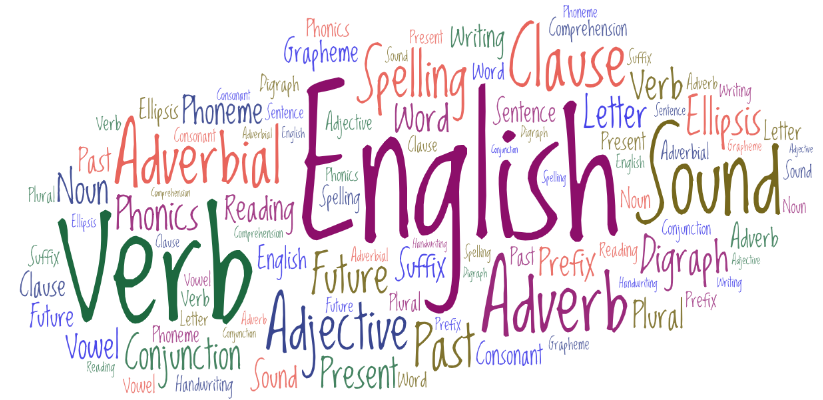
PRIMARY National Curriculum-English
english what will we learn document
